
What this service is
Child and family behavior support is hands-on work with a child and the family around them. It is built on the idea that behavior is a form of communication and that children learn most easily when the adults they trust understand what they are trying to say.
Sessions are planned around the child's real life, not an abstract checklist. A morning that falls apart every school day, a bedtime that takes two hours, a sibling relationship that keeps ending in tears: these are the kinds of everyday situations that shape the work.
This service is one of five offered by the practice. It sits alongside assessment and care planning, which often comes first, and the coaching described on the parent and caregiver training page. The full picture appears on the services overview. Here, the focus is on direct support for the child, with the family closely involved.
A family centered view of behavior
Dr. Thalia Rydz takes a family systems view, and that perspective shapes how this service is offered. A family is not a collection of separate people who happen to share a house. It is a system, and each member affects the others. When one child struggles, the whole household feels it, and when the household changes, the child often feels the difference.
For that reason, sessions look beyond the child alone. Who is usually present when something goes wrong? What does each adult tend to do? How do brothers and sisters respond? What does a calm moment look like and what makes it possible? These questions are asked with curiosity, not blame.
Families are the experts on their own children and on their own values. The practice brings ideas and structure, and the family decides what fits their home, their culture, and their beliefs about raising children.
Strengths first
Every child has interests, talents, and ways of connecting that can be used in the work. A boy who loves building can learn to wait through a game of construction. A girl who loves drawing may be able to show how she feels before she can say it. Starting with strengths keeps the work respectful and motivating.
No one is the problem
The child is not the problem, and neither is the parent. The challenge is a mismatch between what the child needs and what the situation is currently asking of them. Closing that gap is shared work.
Understanding what behavior is communicating
A great deal of challenging behavior makes sense once the purpose is clear. Children may be trying to get something they want, escape something that feels too hard, ask for attention, find comfort, or manage a body that feels overwhelmed. Behavior analysts call this the function of a behavior, which is simply the reason it keeps happening.
Looking for function is practical. If a girl throws her shoes whenever it is time to leave the house, the response depends on why. Is she upset about leaving a favorite activity? Is the transition too fast? Does she dislike the shoes? Each answer points to a different kind of support.
The same behavior can have different reasons in different children, and even in the same child on different days. That is why support starts with careful looking and listening, a process explained in plain language in the practice's educational guides.
- Wanting something, such as attention, an item, or an activity
- Wanting to stop or avoid something that feels hard, boring, or frightening
- Needing comfort or sensory relief
- Not yet having the words or skills to ask in another way
- Reacting to changes in routine, sleep, hunger, or health
Home routines as the foundation
Routines are the framework of a child's day. When they are predictable and clearly understood, children usually feel safer and cooperate more easily. When they are unclear or constantly changing, even small requests can lead to big reactions.
Much of the work in this service happens around the routines that families find hardest. These often include waking up and getting ready, meals, homework, screen time, bath time, and bedtime. The goal is not a perfect schedule. It is a rhythm that makes sense to everyone in the household and can survive a busy week.
A helpful routine tends to include a few features. It is described in simple words or pictures. It has a clear beginning and ending. It gives the child some choices. It gives adults a role that is calm and consistent. More ideas for ordinary days are in the guide on everyday routines and behavior at home.
Starting small
Most families succeed more often when they begin with one routine, not five. A boy who struggles at bedtime might practice one new step, such as choosing two books, for several evenings before anything else changes.
Making routines visible
A simple chart with drawings or photographs lets a child see what comes next without a reminder from an adult. Many children respond better to a picture than to a repeated instruction.
Brothers, sisters, and family dynamics
Siblings are part of every family's story. They share space, attention, and toys, and sometimes they share a good deal of frustration. When one child needs extra support, brothers and sisters can feel overlooked, confused, or even responsible for fixing things.
Child and family behavior support makes room for the whole sibling group. Depending on the family, that can mean helping parents notice when a sibling needs one on one time, giving brothers and sisters simple words to understand what is happening, or planning shared activities that work for everyone.
Consider a household with a girl who has big reactions and a younger brother who has learned to stay quiet to avoid trouble. The support plan would not only address her reactions. It would also create time and attention for him, and perhaps teach both children a simple way to ask for space.
- Planning regular one on one time with each child
- Teaching siblings kind ways to ask for a turn or a break
- Helping parents respond fairly without comparing children
- Setting house expectations that apply to everyone
- Making sure no child feels like a helper, a problem, or an invisible bystander
Play and learning
For young children especially, play is the natural way to learn. Taking turns, tolerating a loss, asking for help, and sharing attention are all practiced in play long before they appear in a classroom.
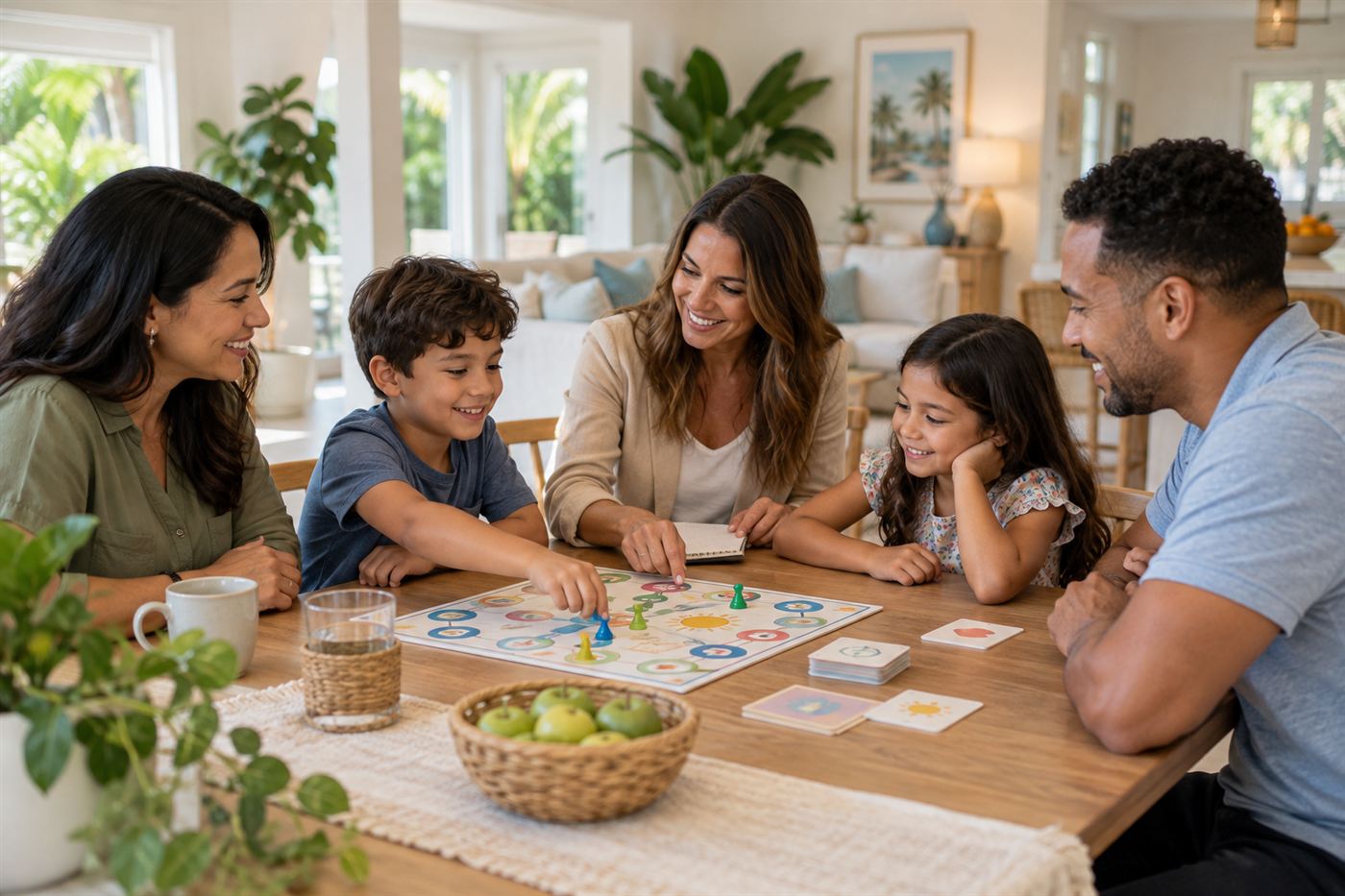
Sessions can include play based activities chosen with the child. These might involve board games, building, pretend play, drawing, or physical games. The purpose is not to turn play into a lesson that feels like a test. It is to use a setting the child enjoys to practice skills that will help in harder moments.
Learning also matters. A child who falls behind in reading or math may start to avoid schoolwork, and avoidance can look like defiance. Support looks at whether the work is at the right level, whether the child understands what to do, and whether there are ways to make the task feel achievable. When school is a major part of the picture, the practice can connect this work with school and educator consultation.
Following the child's lead
Adults often direct play without noticing. Practicing how to follow a boy's idea for a game, comment warmly on what he is doing, and add a small challenge can strengthen the relationship and create more cooperation.
Practicing hard skills in easy moments
Skills such as waiting or accepting a no are easier to practice when no one is upset. Short, low pressure practice during play prepares a child for the moments that count.
Building skills step by step
A central idea in this work is that children need to be taught what to do, not only what to stop doing. If a child shouts to get help, the helpful question is what else the child could do that works just as well. That might be raising a hand, using a card, saying a short phrase, or tapping an adult's arm.
Skills are broken into small steps so that the child can succeed along the way. Practicing is paced so that it is neither too easy nor too hard. Encouragement is specific. Telling a girl that you noticed she waited quietly while you finished a phone call is more useful than a general compliment.
Reinforcement, which simply means following a helpful behavior with something the child values, plays a large part. That can be praise, a favorite activity, extra time with a parent, or a small privilege. Reinforcement is not bribery. It is the natural way all people, children and adults, learn which actions are worth repeating.
- Asking for a break, help, or attention in a respectful way
- Waiting for a turn or a preferred item
- Accepting a change in plans
- Following a simple routine with fewer reminders
- Naming feelings and choosing a calming strategy
- Starting a difficult task and finishing it with support
Working with teenagers
Adolescents deserve a different kind of partnership. A teenager wants to be consulted, not managed, and often has strong views about what will and will not work. Support for older children is built around collaboration, honesty, and respect for growing independence.
Rather than designing a plan around a teenager, the plan is designed with them. A teenage boy may help decide which expectations are worth discussing and which can be relaxed. A teenage girl may choose how she wants to tell her parents when she needs space. Those conversations model the very skills of negotiation and self advocacy that adolescents need.
Parents often need support too. They are balancing safety, trust, and the need to let go. Sessions can include conversations about how to hold boundaries without turning every disagreement into a power struggle, and how to keep the relationship strong when there is conflict. The same respect for independence runs through everything the practice does.
Giving real choices
A choice is only meaningful if each option is acceptable to the adult. Offering a teenager two real options for when homework gets done is more effective than demanding a time.
Keeping the door open
Teenagers are more likely to talk when they feel listened to. Short, calm check ins that do not turn into lectures keep communication possible even during hard seasons.
Boys and girls, equally
Every child deserves support that fits who they are, and that does not depend on gender. The practice treats boys and girls equally in how examples are chosen, how expectations are set, and how concerns are taken seriously.
Adults sometimes carry unnoticed assumptions. A boy who cries may be told to toughen up. A girl who is loud may be called bossy. A quiet girl may be overlooked because she is not disruptive, while a boy who is physically active may be quickly labeled as difficult. These patterns affect what children learn about themselves.
Support here begins by looking at the individual child and the situation, not at a stereotype. The aim is for every child to feel understood and to build skills that suit their interests, strengths, and needs.
How sessions are planned
Sessions begin with a conversation about what the family hopes for and what daily life looks like. From there, the plan takes shape. If an assessment has already been done, its findings guide the first steps. If not, a short period of getting to know the child and the family comes first.
Each session has a purpose. It might be practicing a new skill, reviewing how the week went, rehearsing a difficult routine, or planning for an upcoming change such as a new school year. Parents and caregivers are usually part of the session, sometimes watching, sometimes joining in, and sometimes meeting briefly with Dr. Rydz while the child plays.
Plans are reviewed regularly and adjusted. If something is not helping, it is changed. If something is helping, it is built on. Progress is discussed openly and in plain words, and the practice does not promise any particular result.
- An opening conversation about the child, the family, and daily life
- A shared understanding of what is happening and why
- A small number of priorities chosen together
- Short, practical activities for the session
- A simple plan for practice between sessions
- A check in at the next meeting about what worked and what did not
Keeping the family involved
Children spend far more time with their families than with any professional. For that reason, what happens between sessions matters more than what happens during them. The role of Dr. Rydz is to support the adults so that they feel confident and prepared to carry the work forward.
Families are invited to ask questions, share concerns, and say when something does not fit. They may be asked to try a strategy once or twice and report back. They are never asked to follow a plan they do not understand or agree with.
Consistency between caregivers matters. When parents, grandparents, and other caregivers use similar language and routines, a child understands more clearly what is expected. The practice can help families have these conversations without turning them into arguments. Families who want more structured coaching in addition to direct sessions can look at parent and caregiver training.
Including extended family
Many children are cared for by grandparents, aunts, uncles, or family friends. With the family's permission, these caregivers can be included so that everyone around the child shares the same approach.
Respecting culture and language
Dr. Rydz speaks English and Spanish, and sessions can be held in either language. Families may also hold traditions, beliefs, and expectations about child rearing that deserve respect and that the plan should reflect.
Connecting home and school
A child's behavior at home and at school are connected, even when they look different. A long day of holding it together in a classroom can lead to a hard evening at home. A difficult morning can affect the first hour of school.
With the family's permission, behavior support can include communication with teachers and other school staff. That might mean sharing a simple strategy so that school and home use the same words, or helping a family prepare for a meeting. The practice does not replace school evaluations or provide legal advocacy, but it can help the adults around a child work together.
A helpful starting point is the guide on working with your child's school, which offers practical ideas for parents who want to collaborate with teachers in a respectful and organized way, from asking for a meeting to keeping simple notes.
Where support takes place
Support can take place in the home, at school, by phone or video, or at the office. Each setting has strengths. The home shows daily life as it really is. School shows how the child manages in a group. Video makes it easier to fit sessions into a busy schedule. The office offers a quiet, predictable space.
Many families use a combination. A session at home may be followed by a video check in, and an office meeting may be followed by a school conversation. Which settings are available for a particular family is confirmed in conversation. The details are covered on the page about home, school, telehealth and office visits.
If you are using video, a quiet space and a few simple toys or materials usually make the session smoother. Younger children often do better in shorter segments with movement breaks, while older children may prefer to join briefly and then step away.
What this service does not do
Honest expectations make for better partnerships. Child and family behavior support does not diagnose conditions, prescribe medication, or provide emergency care. It is not a substitute for medical care, school evaluations, or legal guidance. It does not promise that a child's behavior will change in a certain way or by a certain date.
It also does not set out to make a child quiet or compliant at any cost. The goal is a child who can communicate, learn, and take part in family and community life with dignity, and a family that feels more confident and connected.
If your child or anyone else is in immediate danger, call 911. For a mental health crisis, call or text 988. This service is not an emergency service, and sessions are not a substitute for urgent help.
Paying for support and getting started
The practice works with three payment routes in general terms: insurance, Medicaid, and private pay. Coverage and eligibility are verified before services start, and no plan is promised to pay for any service. The page on paying for services explains each route and suggests questions to ask your plan.
To begin, you can use the contact page, where the phone number and email address are listed automatically. A short message about who you are and what you would like help with is enough. Please leave out private details such as full names or medical information until you have spoken with the practice.
Many families start with a general conversation, which gives both sides a chance to see whether the service is a good fit. There is no pressure to decide on the spot, and you are welcome to ask questions about anything on this page.
Common questions
Who is child and family behavior support for?
It is for children and the families who care for them. Families often reach out when daily routines feel hard, when siblings are struggling to get along, when a child has trouble with transitions or communication, or when parents want a clearer plan. Boys and girls are equally welcome, and the work is shaped around the individual child, the family's values, and what daily life actually looks like in their home.
Do parents have to be in the room?
Usually, parents or caregivers take part in some way, because the adults who spend the most time with a child are the ones who carry the work forward. Participation can look different from one family to another. Some parents watch and join in, others meet briefly with Dr. Rydz while the child plays. How involved you are is discussed and adjusted as the work goes on.
Can siblings be included?
Yes, when it fits the family. Brothers and sisters are part of the household and are often affected by what a child is going through. They may join a play activity, learn a simple way to ask for space, or simply be part of a family conversation. Parents decide who participates, and the plan is designed so that no child feels singled out or left out.
Is the support available in Spanish?
Dr. Rydz speaks both English and Spanish, and sessions can be conducted in either language, depending on what suits your family most comfortably. Some families use both languages at home, and that is welcome too. If you need an interpreter or translator for school or legal documents, those are separate matters that may be arranged elsewhere. You can ask about language preferences during your first conversation.
Does a child need an assessment first?
Often a family begins with assessment and care planning, which helps everyone understand what is happening and where to start. In some situations the practice may begin with a shorter getting to know you period before drawing up a plan. This is discussed in the first conversation, so families are not asked to follow a path that does not suit them.
How do you work with teenagers?
Teenagers are treated as partners. They are invited to share their view, help choose goals, and suggest ideas for how adults can support them. Parents are supported too, with ideas for holding boundaries calmly and keeping communication open. Teen sessions may be shorter, may take place by video, and may include time apart from or together with parents, depending on what feels comfortable.
Will you tell me exactly what will change?
No. No honest professional can promise how a particular child will respond. What the practice can offer is a thoughtful plan, clear explanations, regular reviews, and adjustments when something is not helping. Progress is discussed openly in plain language, and families are always welcome to ask questions, change direction, or pause. The aim is a partnership, not a promise.
What if there is a safety emergency?
If a child or anyone else is in immediate danger, call 911. If you or someone you know is in a mental health crisis, call or text 988. Behavior support is not an emergency service and cannot respond to urgent situations. Once everyone is safe, you are welcome to contact the practice to talk about next steps in planning for the future.