
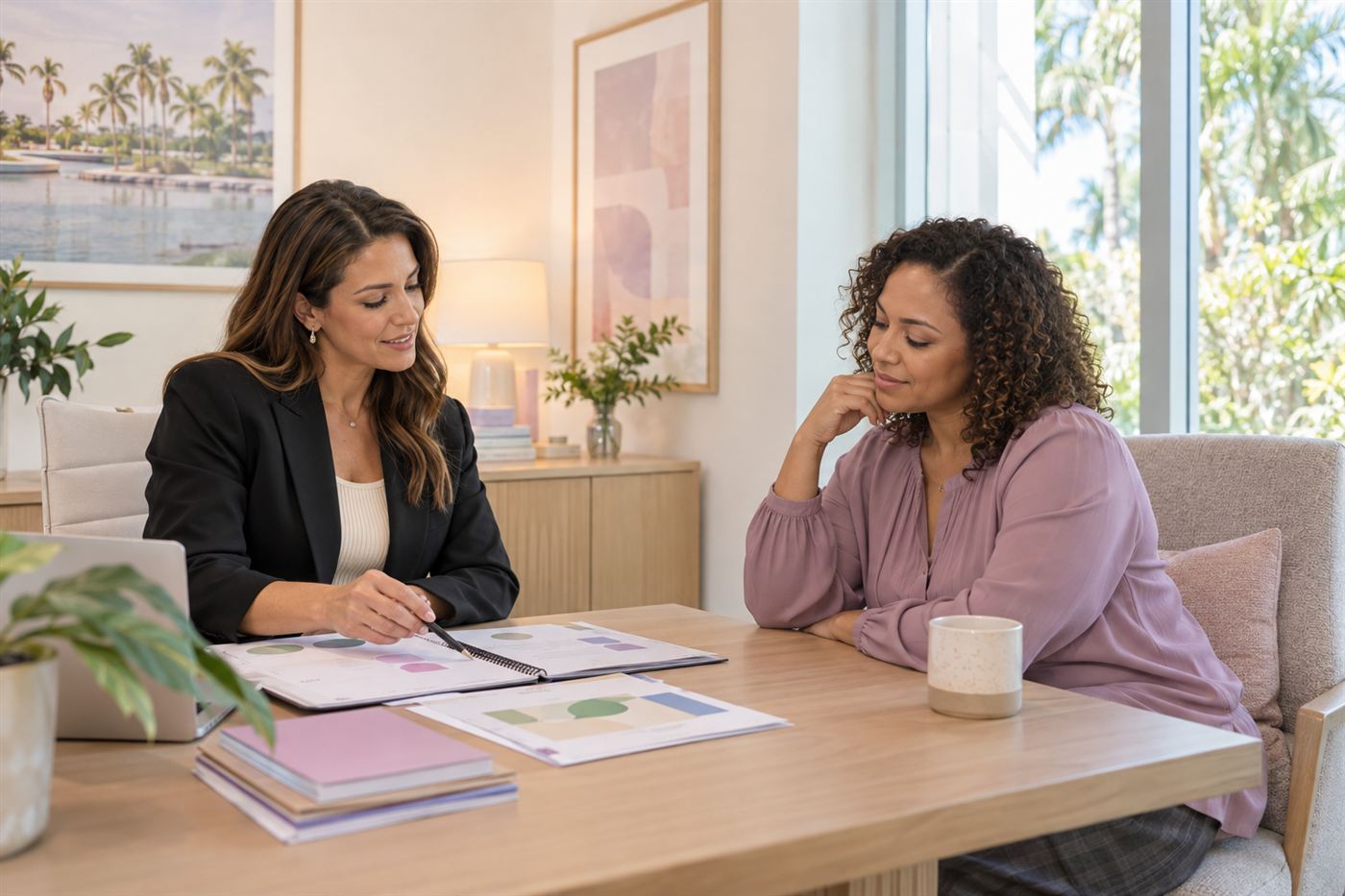
Why start with an assessment
When behavior becomes hard, the pull to act quickly is strong. A parent is worn out, a teacher has twenty other students, and everyone wants the hard moments to stop. The trouble with acting before understanding is that a strategy that fits one child's situation can miss another's entirely.
An assessment slows things down in a useful way. It asks what is happening, where, with whom, and what seems to keep it going. It also asks what is going well, because strengths and routines that already work are valuable building blocks.
The purpose is not to label a child or to assign blame. It is to build a shared, honest description that everyone involved can recognize, so that the plan that follows is grounded in the child's real life. This practice offers assessment and care planning as one of five connected services, described on the services overview.
Saving time and effort in the long run
Families often tell stories of trying one idea after another: a chart from one website, a tip from a neighbor, a technique from a book. Each idea may be sensible, yet together they can feel like a pile of failed attempts. A careful assessment can reduce that scatter by pointing to a few steps that fit the child and the household, so that effort goes where it matters.
Giving everyone the same picture
When a parent, a teacher and a grandparent each describe a child differently, the child may hear mixed messages. A shared written description gives the adults a common language and lowers the chance of working at cross purposes.
What an assessment is, and what it is not
In this practice, an assessment is a structured process of conversation and observation. It draws on what caregivers and teachers know, on what can be seen directly, and on the child's own perspective when that is appropriate.
It is helpful to be clear about what it is not. It is not a school evaluation, and it does not replace one. It is not a medical examination. It does not give a diagnosis, and it is not designed to settle a disagreement about services. It is a behavior-focused way of understanding what a child is doing and what the surrounding environment may be contributing.
- A set of conversations with the adults who know the child
- Observation in a natural setting where possible
- A review of routines, supports and any information the family chooses to share
- A written summary and care plan in plain language
- A follow-up conversation to adjust the plan
The first conversation
The process usually begins with a conversation between the family and the practice. It is a time to describe the situation in your own words and to ask about how the work happens. It is not an exam, and no one will rush you.
You are encouraged to talk about strengths first. What does your child love? What makes them laugh? What do they do well? Starting there sets a respectful tone and gives the team a fuller picture than a list of difficulties could.
Then the conversation turns to the concerns. What happens, how often, and what do the moments look like from the outside? What have you already tried? What do you hope will be different in a few months? The guide to preparing for a first visit suggests notes that many families find helpful to bring.
How much to share
You decide how much to say. A first message can be as short as a sentence. Sensitive details can wait for a conversation in which privacy has been discussed. The contact page describes what is useful to include and what is better left for later.
Gathering information from caregivers
Parents and caregivers are the experts on a child's history. They know when a pattern began, what changed around that time, and what has helped even a little. Their observations are the foundation of the assessment.
Caregivers are asked about daily routines, sleep and meals, the way transitions are handled, how the child communicates wants and needs, and what brothers and sisters notice. Questions are asked gently and with curiosity. There are no right or wrong answers, and no one is graded.
Where more than one adult shares care, the practice tries to hear from each of them. A mother, a father, a grandparent and an aunt may all see different things, and the differences are useful. Consistency between adults often becomes an important part of the plan.
Information about routines
Routines are one of the most revealing parts of a child's day. A morning that begins with rushed shoes and a missing backpack is a different situation from one that begins with a calm breakfast. Asking about routines helps the team see where the day tends to strain and where it flows.
Information about communication
How does the child ask for help, say no, or tell you they are upset? Some children use many words, some use few, and some use gestures, sounds or actions. Understanding the child's communication is central, because behavior is often a form of communication.
Gathering information from teachers and school staff
When school is part of the picture, the child's teachers can offer a different and important view. With the family's permission, and in keeping with school policies, the practice may speak with the teacher, a school counselor or other staff who know the student.
Teachers can describe how the student does with different kinds of tasks, how they get along with classmates, and what happens at transitions such as lunch, recess or the end of the day. A fourth grade girl who is calm during reading but struggles during group projects, or a fifth grade boy who works well alone but has difficulty with unstructured time, will show different patterns that matter for the plan.
This information is gathered respectfully and with an understanding that educators are busy. The goal is to build a shared picture, not to criticize a classroom. The school and educator consultation page describes how the practice works with teams over time.
Observation: seeing behavior in context
Observation means watching what happens in a natural setting, such as a home routine, a classroom, or a play activity. It adds something that conversation alone cannot provide: the actual sequence of events.
Observation is done gently. The aim is not to catch anyone doing something wrong. It is to notice small details, such as what happens just before a hard moment, what the child does, and how the people around them respond. Those details often point to patterns that are invisible in the middle of a busy day.
Observation at home
At home, observation might happen during a routine such as after-school snack, homework, or bedtime. Families sometimes worry about being watched, and that worry is understandable. The observer is there to learn, not to evaluate your housekeeping or your parenting.
Observation at school
At school, observation is arranged with the school's agreement and follows its visitor policies. When in-person observation is not possible, other approaches may be used, such as a conversation with the teacher or the review of information the school chooses to share.
Observation by video or phone
Some information can be gathered by video call, for example by seeing a routine in the family's own kitchen. Families should think about privacy, who is in the room, and what everyone is comfortable with before agreeing to video. The settings page covers these points in more detail.
Understanding what behavior is communicating
A core idea in behavior analysis based work is that behavior usually serves a purpose for the person. This is often called the function of the behavior. In everyday words, it asks, what is this doing for the child?
Broadly, behavior tends to help a person get something they want or need, such as attention, an item or an activity, or to get away from something that feels hard, boring or overwhelming. Sometimes behavior is related to how the body feels, such as being tired, hungry, or sensitive to noise. Understanding which of these may be involved changes what helps.
For example, imagine a general case of a second grade boy who tears up his worksheet. If the worksheet is too long, tearing it might be a way to escape. If he has been waiting without a turn, it might be a way to get an adult's attention. The same action, two different meanings, and two different plans. This is an educational illustration, not a description of a real student.
Looking at what comes before and after
Part of the process is noticing what happens right before a behavior and what follows it. A request, a change in routine, a noisy room, or a long wait are examples of what might come before. A break, a turn, a reaction from an adult or a classmate are examples of what might follow. Patterns in these details help the team form ideas about function.
Holding ideas loosely
Ideas about function are working guesses, not conclusions. They are tested against what happens next and revised if they do not fit. Good assessment stays curious.
Strengths, interests and what already works
Every child has strengths, and an assessment that ignores them is incomplete. A child who adores animals, builds elaborate block towers, remembers every word of a song, or comforts a younger sibling is showing skills and interests that a plan can use.
Strengths also help in practical ways. A girl who loves drawing might use pictures to plan her morning. A boy who loves helping might be given a real job at the start of a hard transition. Families often discover that something they already do, such as a countdown before leaving the park, is a strong tool that can be extended to other situations.
The care plan builds on what works and does not start from zero.
Asking about good days
Exceptions are among the most useful things an assessment can find. If a child has a smooth morning once or twice a week, what was different? Perhaps a grandparent was home, perhaps clothes were laid out the night before, perhaps the morning began with a favorite song. Good days contain clues, and the team looks for them with the same interest as for hard days.
Listening to the child
When a child is able and willing, they are invited to share their own view. A short, relaxed conversation during play or drawing can reveal what feels unfair, scary or boring. Children often say something simple and surprising, such as that the lunchroom is too loud, and that one sentence can change a plan.
A general example from start to finish
To make the process concrete, here is a general educational example. It is invented to illustrate the steps and does not describe a real child or promise any outcome.
A family contacts the practice because evenings have become very difficult for their eight year old daughter. Dinner often ends in tears, and homework has become a daily struggle. In the first conversation, the parents describe her love of horses, her kindness to her little brother and her pride in her handwriting. They also describe the hard moments in detail.
The team asks about the sequence of the evening. It turns out that the daughter returns from after-school care tired and hungry, that homework starts immediately, and that the first task is a long writing assignment. An observation by video during homework shows that she starts well but stops after a few minutes, puts her head down, and says she cannot do it. A parent responds with a long explanation, and the daughter becomes more upset.
The team forms a working idea: the writing task may feel too big, and the long explanation may add to the pressure. The care plan proposes a snack and a short rest before homework, breaking the writing into small visible steps, a simple phrase for asking for help, and a brief, calm response from the adult. The family reviews the plan, changes one step that does not suit their evening, and agrees to try it for two weeks. At a follow-up, they talk about what helped and what did not, and the plan is adjusted.
Notice what the example does not do. It does not label the child, blame the parents or promise that the steps will work. It shows a process of listening, observing, guessing carefully, trying and adjusting.
How data are used, in plain language
Data sounds technical, but in this work it simply means careful notes about what is happening. Data might be a tally on a sticky note, a short log of when a hard moment occurred and what came before it, or a rating of how the evening went.
The practice keeps data collection light and realistic. A plan that requires ten minutes of paperwork after each difficult moment is unlikely to survive a busy household. The goal is to collect just enough information to see whether a plan is helping and to make decisions together.
Data are shared with families in clear terms. If a pattern is visible, you will hear what it seems to show. If the pattern is unclear, that will be said too. Information is a tool for conversation, never a verdict.
- What happened and when
- What came just before
- What the adult did
- What happened next
- How the day felt overall
Writing a plain-language care plan
After the information has been gathered, the practice writes a care plan. The plan is a short, readable document that describes what was learned, what the priorities are, and what adults can try. It is written for the family, not for a filing cabinet.
A good plan avoids jargon. If a technical term is needed, it is explained. The steps are specific enough to be useful and flexible enough to fit real life. They are often written as small, concrete actions: what to say, when to offer a choice, how to support a transition, and how to respond when a hard moment happens.
What a plan may include
A plan may include a short description of the child's strengths, one to three priorities, ideas for preventing hard moments, ideas for teaching new skills, and suggestions for how adults respond. It may also include notes on how home and school will share information.
What a plan does not include
A plan does not include promises of a particular change, comparisons to other children, or instructions that contradict a family's values. It does not replace guidance from a child's health care provider or the school's own planning documents.
Reviewing the plan with your family
A plan is not finished until the family has seen it, questioned it and shaped it. Review is a conversation, and it is where many of the most important adjustments happen.
You may be asked whether the priorities feel right, whether the steps seem realistic, and whether anything clashes with your family's routines, culture or beliefs. If a suggestion would be difficult to carry out on a weeknight, that is useful information, and the plan changes.
Where a child is old enough and willing, they may be included in part of the review. A young person who understands the plan and had a say in it is more likely to take part. A twelve year old girl who helped choose a signal for asking for a break is likelier to use it than one who was simply handed a rule.
Adjusting the plan over time
Children grow, seasons change, and households shift. A care plan is a living document. It is reviewed on a regular schedule agreed with the family and revisited sooner if something significant changes.
Adjustments might mean simplifying a step that is too much, retiring one that is no longer needed, or adding a new one as the child's skills develop. If something is not helping, the plan changes. That is part of the work, not a failure of it.
Review meetings are also a place to celebrate small steps. A calmer bedtime on three nights out of seven is worth noticing, and so is a parent's growing confidence. Those observations are recorded alongside the difficult moments, so that the picture stays balanced and families can see what is moving, even slowly.
The practice does not promise that a plan will lead to a particular change. What it can offer is a thoughtful, collaborative process and a willingness to keep learning alongside you.
How assessment connects to the other services
Assessment and care planning often lead into other services. The plan may identify a need for parent and caregiver training, so that adults feel confident with the steps. It may suggest a conversation with the school. It may lead to hands-on practice through child and family behavior support.
Other families choose to stop after the plan and carry it out on their own, returning for a check-in later. Both paths are fine. The practice does not assume that every assessment must lead to more services.
Payment, consent and privacy
Families may pay by insurance, Medicaid or private pay. How an assessment is handled for each route can differ, and the details are confirmed with you before services start. The practice does not promise that any plan will cover any service. The guide to paying for services offers general questions to ask your plan.
Consent matters at every step. Nothing is shared with a school or another professional without your permission, and you are welcome to ask what will be recorded, who will see it and how it will be stored. If you change your mind about any part of the process, you can say so.
A note about safety
This practice is not an emergency service. If someone is in immediate danger, call 911. For a mental health crisis, call or text 988.
If, during assessment, a safety concern comes up, it is taken seriously and discussed openly with the family. Behavior support works alongside other help, such as medical care or crisis services, and does not stand in for them.
Common questions
How long does an assessment take?
The length depends on the child, the settings involved and the questions being asked. Some families need only a few conversations, while others benefit from additional observation or school input. The timeline is discussed during the first conversation and adjusted as things develop. The practice does not promise a set number of meetings, because rushing can mean missing something important, and dragging it out is not helpful either.
Does an assessment give my child a diagnosis?
No. A behavior-focused assessment looks at what a child is doing, the context around it and what it may be communicating. It does not diagnose, and it does not replace an evaluation by a medical provider or the school. If you have questions about a diagnosis, a child's health care provider is the right person to ask, and the practice is glad to work alongside that provider with your permission.
Will my child be observed at school?
Only with the family's permission and the school's agreement. Schools have their own policies about visitors, and the practice respects them. When in-person observation is not possible, the team may use other approaches, such as speaking with the teacher or reviewing information the school chooses to share. You will always know in advance what is planned and have a chance to say yes, no or not yet.
Do we have to share everything about our family?
No. You decide what to share and when. Many families begin with the basics and add detail as trust builds. If a topic feels too private, you can say so. What matters most is that the information you do share is accurate and that the plan fits your real life. The practice will explain how information is stored and who may see it before you decide.
What if I disagree with something in the plan?
Please say so. A plan is a draft until you have reviewed it, and your feedback is part of the process. You know your child, your values and your household better than anyone. If a step does not fit, it should change. Disagreement is not a problem. It often leads to a better plan, because it points to something the team had not yet understood.
Can both parents or other caregivers take part?
Yes, and it is often encouraged. When more than one adult shares care, hearing from each of them gives a fuller picture and helps the plan stay consistent. Grandparents, aunts, uncles and other trusted caregivers can take part too, in person or by phone or video. If scheduling is difficult, the team can look at ways to include everyone without making it a burden.
How is payment handled for an assessment?
Families may use insurance, Medicaid or private pay. What applies to your family depends on your plan or program and is confirmed before services begin. The practice does not name plans, state prices on this site or promise that any service will be covered. Ask about payment in your first conversation so that there are no surprises, and see the paying for services page for general guidance.