
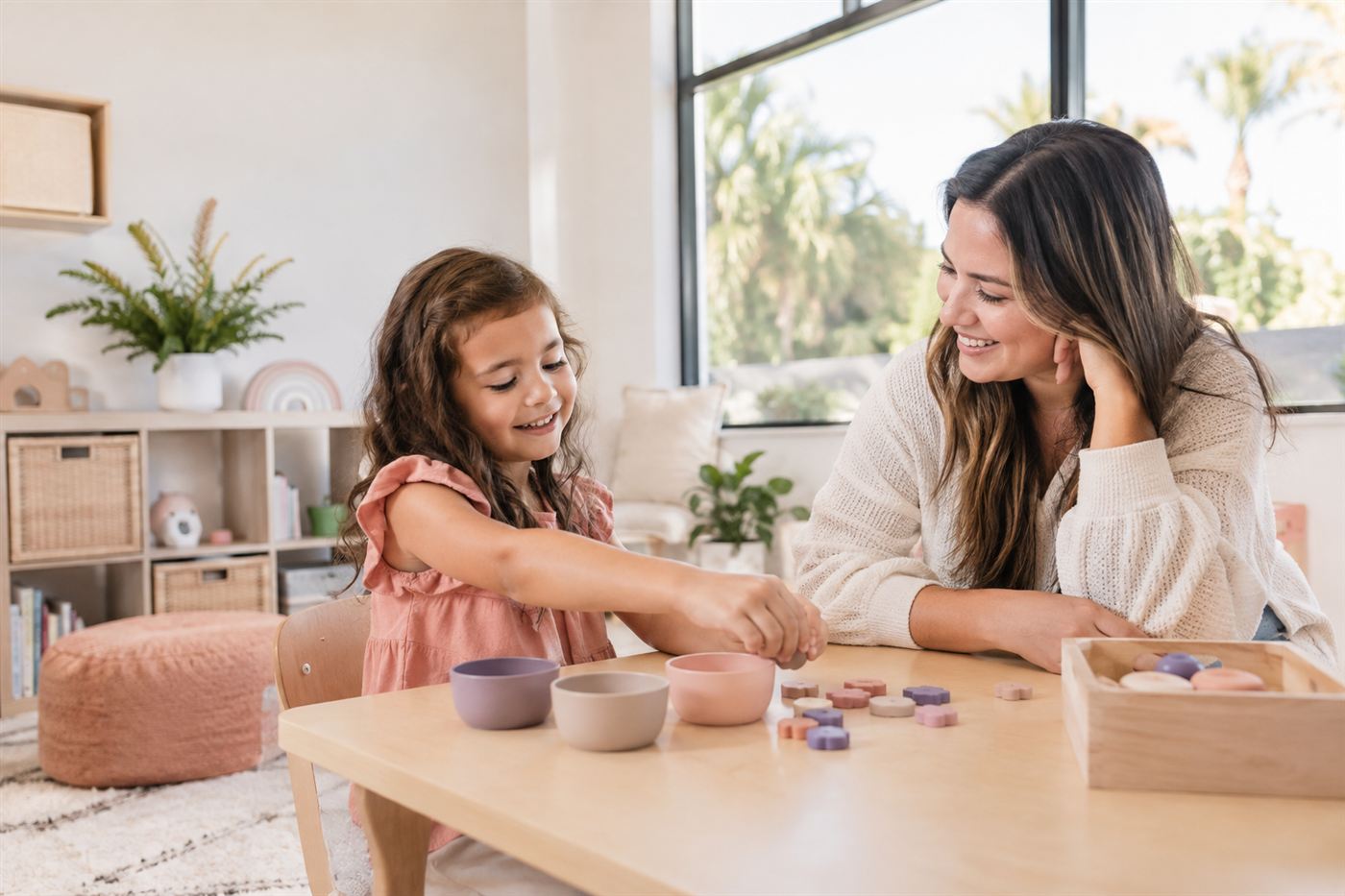
How routines shape behavior
A routine is a pattern that repeats often enough that a child can predict what comes next. Prediction is powerful. When a girl knows that shoes go on after breakfast and the car comes after shoes, her mind does not have to guess, and guessing is tiring. Uncertainty takes effort, and children who are spending effort on uncertainty have less left for patience, flexibility and cooperation.
In behavior analysis, behavior is understood as something that happens in a setting and is influenced by what comes before it and what follows it. Routines are one of the most practical ways to shape that setting. They set up the moments before behavior, they make expectations visible, and they give adults natural chances to notice and appreciate what a child is doing well.
This guide does not describe a perfect household, because none exists. Every family has loud mornings, rushed dinners and evenings that fall apart. The aim is simply to offer a way of looking at daily life that is curious and kind, and to share a few ideas that families may find worth trying in their own words and at their own pace.
Look at the pattern before changing it
Before adjusting a routine, it helps to watch it for a few days without trying to fix anything. Notice when the day runs smoothly and when it does not. Notice what was happening just before the harder moments, who was present, how tired or hungry everyone was, and how much was being asked of the child at that moment.
Patterns often appear quickly. A boy who melts down at the same point each afternoon may be hungry, tired, or leaving a game he was enjoying. A girl who resists getting dressed may find the clothing uncomfortable, or may be avoiding the next step in a long morning chain. Naming the pattern is not about assigning blame. It is about understanding what the moment is asking of a child.
A simple way to observe
Pick one part of the day and jot a few words for several days: the time, what was happening, what the child did, and what happened next. Keep it short and factual. After a week, read it over and see whether anything repeats.
Look for what is working, too
Every household has moments that go well. Ask what is different about them. Perhaps the morning runs smoothly when there is a visual checklist, or dinner is calmer when the television is off. Good moments hold clues that are often easier to build on than problems are to remove.
Mornings
Mornings pack many demands into a short window: waking, dressing, eating, packing and leaving. Adults are often watching the clock, and children can feel that pressure even when nothing is said aloud. A small amount of preparation the night before can lower the temperature considerably.
Consider laying out clothes, setting the backpack by the door and deciding on breakfast in advance. Fewer decisions in the morning means fewer opportunities for disagreement. Some families find that waking a few minutes earlier, with a gentle and predictable start, feels better than a rushed scramble.
- Prepare what you can the evening before.
- Use a short visual sequence instead of repeated reminders.
- Offer two acceptable choices when it fits.
- Notice and appreciate steps completed without being asked.
A visual sequence
Many children respond well to seeing the order of the morning rather than hearing it repeated. A short list of pictures or words on the wall, such as wake up, wash, dress, eat, shoes, can reduce reminders. The child can check off steps, and the adult can refer to the list instead of repeating instructions.
Keep the list short, and update it as the child grows. A boy who is proud of reading his own list may enjoy owning the process.
Choices that keep things moving
Offering two acceptable choices, such as the blue shirt or the green one, gives a child a sense of control within limits. Avoid offering a choice you are not prepared to honor, and avoid too many choices when time is short.
Mealtimes
Meals are about more than food. They are a daily chance to sit together, talk and practice skills like waiting, passing, asking and trying something new. They can also become tense when adults worry about what a child is or is not eating.
General education sources on children and eating often encourage a calm atmosphere, predictable meal and snack times, and no pressure at the table. Pressure tends to raise stress, and stress rarely helps anyone enjoy food. If you have questions about a child's eating, growth or health, a medical professional is the right person to ask, not a general guide like this one.
Predictable timing
Hunger and tiredness make everything harder. Meals and snacks at roughly the same times each day help children arrive at the table ready to participate. A girl who is not starving when she sits down is more likely to join the conversation.
Shared roles
Giving a child a small job, such as setting out napkins or carrying plates when it is safe, builds a sense of belonging. It also gives the child something to do while waiting, which is often the hardest part of a meal.
Talking at the table
Simple conversation starters, like asking everyone to share one good thing from the day, shift attention away from the plate. Let a child pass if they do not want to answer. The goal is connection, not an interview.
After-school time and homework
Children arrive home from school having held themselves together for hours. Many need to unwind before they can start more work. Expecting immediate homework can invite resistance, while a short, predictable pause can make the next task far easier.
Consider a routine that begins with a snack, a bit of movement or quiet, and a short talk about the day. Then move to homework at a regular time and in a regular place. Predictability helps a child begin without a daily negotiation.
- Allow a short pause before starting.
- Use the same time and place most days.
- Break big tasks into small steps.
- Appreciate effort out loud.
- Tell the teacher if homework is consistently too hard or too long.
Setting up the space
A clear table, good light, and the supplies a child needs within reach remove small obstacles. Keep distractions, such as a tablet or a noisy television, out of view if you can. A boy who has to hunt for a pencil may lose focus before he starts.
Breaking work into pieces
A long assignment can feel enormous. Dividing it into short parts, with a small pause between each, makes it easier to begin and easier to finish. A timer can help, as long as it feels like a helper and not a threat. Let the child see the pieces get smaller as they are completed.
What adults can do
Sit nearby when a child is starting, and then step back as they gain confidence. Praise effort and strategies, such as 'you kept going even though that was tricky,' rather than only correct answers. If homework regularly feels overwhelming, it may be worth sharing that with the teacher so home and school can talk about it together.
Screen time
Screens are part of modern family life, and families make different choices about them. What matters most is usually not a single number but the pattern: when screens are used, what they replace, and how the ending of screen time is handled. Ending a favorite show or game is hard for many children, because the activity is engaging and the stop feels abrupt.
Predictability helps here too. When a girl knows that tablet time comes after homework and lasts until a visible timer ends, the end is less of a surprise. A warning a few minutes before it ends gives time to reach a stopping point.
Clear start and stop
Agree in advance when screens start and stop, and say it in calm, simple words. A visual timer lets a child see time passing without an adult repeating it. Avoid ending screen time in the middle of a task if you can, such as halfway through a level, because that makes the stop feel unfair.
What comes next
The moment after screens end is often the hardest. Having a pleasant activity ready, like a snack, a walk or a game with a sibling, gives the child somewhere to go emotionally. A boy who knows something enjoyable follows the screen may find it easier to put it down.
Family agreements
Some families write down their agreements together and post them. Involving children in setting the rules, to the extent that fits their age and the family's values, often increases their willingness to follow them. Adults who follow the same agreements model the idea that the rules belong to everyone.
Transitions during the day
A transition is any change from one activity or place to another. Leaving the park, stopping play to eat, turning off the television and getting in the car are all transitions. They are among the most common moments for tears, arguments and delays, because the child must stop something enjoyable and start something that may be less so.
The good news is that transitions respond well to small supports. A little warning, a clear sign of what is coming, and a pleasant element in the next activity can make a big difference.
- Warn before changes in simple, calm words.
- Pair the warning with a visual or sound cue.
- Link the next activity to something pleasant.
- Practice tricky transitions during calm moments.
Give notice
A spoken warning such as 'five more minutes, then shoes' gives a child time to adjust. Pair it with something they can see or hear, such as a timer or a short song. Be consistent so the warning becomes a familiar signal rather than a nag.
Use the child's interests
Connecting a transition to something the child enjoys can ease it. 'Let's race to the car' or 'You can pick the music when we get in' turns a stop into a start. Choose supports you are comfortable repeating, because children learn quickly what a signal means.
Practice when things are calm
Rehearsing a transition at a relaxed moment, such as practicing the goodbye to a toy, builds familiarity. A girl who has practiced the steps of leaving the playground may find the real moment less overwhelming.
Bedtime
Bedtime brings together tiredness, separation from caregivers and a long list of small requests: one more drink, one more story, one more question. These are common and understandable. A child who is tired has fewer coping skills, and a child who feels alone in a dark room may seek connection in whatever way works.
A predictable, calming sequence repeated nightly is one of the most widely discussed supports for evening routines. It might include a bath, pajamas, teeth, a story and a goodnight phrase. The order matters less than the consistency. Over time, the sequence itself signals that the day is ending.
Wind down
Lowering the energy in the hour before bed, with quieter activities and dimmer lights, helps the body prepare for sleep. Active play and exciting screens close to bedtime can make settling harder for some children.
Handling the extra requests
Many families find it helpful to build the usual requests into the routine in advance, such as a drink, a last bathroom visit and a hug, so the child does not need to ask for them later. A boy who gets his drink before the story is less likely to call out for it afterwards.
Staying calm
Adults who respond to bedtime requests calmly and briefly tend to avoid long exchanges. A short, warm, repeated phrase, such as 'I love you, see you in the morning,' reassures without inviting a debate. If sleep difficulties are persistent or worrying, a medical professional is the right person to consult.
Brothers, sisters and shared spaces
Siblings share parents, toys, space and attention, and they notice every perceived unfairness. Conflict among siblings is typical, and it can also be a place where children practice sharing, negotiation and repair. The adult role is not to prevent every disagreement but to build conditions where kindness is more likely and noticed when it appears.
Routines can help. Predictable turns, shared and personal spaces, and regular one-to-one time with each child reduce the sense of competition. A girl who knows she will have a special ten minutes with a parent is less likely to compete for attention in the meantime.
Clear turns and spaces
A visible turn chart or timer can settle arguments about who goes first. Giving each child a space or container that is theirs alone protects belongings that matter. Shared items can have shared rules that are agreed in a calm moment.
Noticing cooperation
It is easy to respond only when siblings fight. Make a point of noticing and mentioning moments when they play well, share or help each other. Specific appreciation, like 'you waited your turn and let him go first,' teaches what to repeat.
Fairness is not sameness
Children often equate fairness with identical treatment, but needs differ. Explaining, in age-appropriate words, that each child gets what they need at the time can help over the long run. Keep the tone matter-of-fact and avoid comparing one child to another.
Responding calmly to hard moments
Even a carefully planned routine will have bad days. A child may be sick, tired, upset about something at school, or simply having a hard time. What adults do in those moments matters, and calm is contagious. A steady voice, a few words and a bit of space can help a child regain control faster than a lecture.
Behavior analysis encourages adults to ask what a behavior may be communicating. A child who yells may be saying 'I am overwhelmed,' 'I want you to notice me' or 'I do not want to do this.' Responding to the message, while still holding reasonable limits, is more helpful than responding only to the volume.
- Pause and breathe before responding.
- Use few, calm words.
- Respond to the message behind the behavior.
- Reconnect and talk it through once everyone is calm.
Stay brief and clear
During a hard moment, fewer words are usually better. A short, calm statement about what will happen next is easier to hear than a long explanation. Save the conversation for later, when everyone is calm.
Repair afterwards
After the storm, reconnect. A brief conversation about what happened, what could help next time, and a reminder that you care helps a child learn from the moment. Adults also have hard days, and showing how to apologize and start again is a powerful lesson.
Appreciation and encouragement
Children repeat what gets noticed. Appreciation is not about bribes or constant praise, it is about letting a child know that effort and kindness are seen. Specific words work better than general ones. 'Thank you for putting your plate in the sink without being asked' carries more information than 'good job.'
Aim to notice more of what goes right than what goes wrong. This is easier said than done on a busy day, but even a few moments can shift the tone of a household. A boy who regularly hears what he is doing well is more likely to believe he can do it.
Small and sincere
Appreciation does not need to be elaborate. A smile, a thumbs-up or a short sentence at the right moment can be enough. Sincerity matters more than size.
Effort over perfection
Appreciating effort, persistence and improvement encourages children to keep trying. Appreciating only perfect performance can make a child afraid to fail. Describe what you saw them do, and let them draw their own pride from it.
Culture, values and family style
Every family has its own way of doing things, shaped by culture, language, faith, work schedules and personal history. A routine that suits one household may not suit another, and nothing in this guide should be taken as a single correct way to raise a child. Families in Broward County come from many backgrounds, and the diversity of daily life is part of what makes home routines personal.
Good routines reflect a family's values. If shared meals are important, build the day around them. If bilingual conversation matters, build time for it. If extended family plays a large role, include grandparents and relatives in the plan so everyone responds in similar ways. Consistency among caregivers helps children, and it works well when caregivers have talked openly about what they hope for.
Talking among caregivers
When two or more adults share care, a short conversation about the main routines and responses can prevent mixed messages. Differences are normal. The goal is to agree on a few essentials, and to treat each other with respect when styles vary.
Adjusting for your own life
Shift work, long commutes and single-caregiver households all change what is realistic. A smaller routine that is actually followed is better than an ambitious one that collapses. Start with one small piece, and add more only when it feels steady.
Starting small and staying flexible
It is tempting to overhaul everything at once, but big changes are hard to sustain. Choose one routine to focus on, such as the morning or bedtime, and make one small adjustment. Give it a couple of weeks before judging whether it helps. Children, like adults, take time to adapt to change.
Expect setbacks. A new routine often gets worse before it gets better, because the child is testing whether it is real. Staying calm and steady, without punishing the testing, tells the child that the new pattern is here to stay. If something is not working after a fair trial, adjust it. A routine is a tool, not a rule of nature.
- Pick one routine and one small change.
- Give it a couple of weeks.
- Expect some testing and some setbacks.
- Notice and appreciate progress, however small.
- Adjust when needed without blaming anyone.
When to seek more support
Most challenges with routines are part of ordinary family life. Sometimes, however, a family feels stuck, a behavior seems to be affecting a child's safety, school or relationships, or the strain on the household is growing. In those cases, talking to a qualified professional can help.
The practice offers parent and caregiver training, child and family behavior support and assessment and care planning, and these can take place at home, at school, by phone or video, or at the office. Learn how the practice thinks about behavior on the our approach page, and read the guide to working with your child's school if your routines connect to school life.
For questions about a child's health, sleep or development, a medical professional is the right place to start. If someone is in immediate danger, call 911. For a mental health crisis, call or text 988.
Common questions
How long does it take for a new routine to feel natural?
It varies by child, by routine and by how consistently adults follow it. Many families see a routine settle over a few weeks, though it often gets a little harder at first as the child tests whether the change is real. Staying calm and steady, and making small adjustments rather than constant changes, usually helps a new pattern take hold.
My child resists every transition. Is that unusual?
Resistance to transitions is very common, because stopping something enjoyable and starting something else asks a lot of a child. Warnings, visual cues, a pleasant next step and practice during calm moments often help. If transitions are causing significant distress or are affecting daily life, it may be worth talking to a qualified professional about what support could look like.
Should rules be the same for all my children?
Rules that everyone shares, such as kindness and safety, can be the same. Other expectations may reasonably differ with age, needs and abilities. Explaining this calmly, without comparing children, helps them understand that fairness is about each child getting what they need. Involving the whole family in setting shared agreements often makes them easier to follow.
Is it wrong to use a timer or a chart?
No. Timers and charts are simply tools that make expectations visible and reduce repeated reminders. They work well when they feel like helpers, not threats, and when the child understands them. If a tool is causing more stress than help, adjust it or set it aside. Tools should fit the child and the family, not the other way around.
What if the two adults at home handle things differently?
Differences are normal. It helps to talk privately, away from the child, about the two or three things that matter most and to agree on those. Beyond them, styles can vary. Respecting each other in front of the child, and avoiding undermining one another, makes it easier for the child to feel secure.
Are the ideas in this guide advice for my child?
No. The ideas here are general educational examples and are not individual clinical, medical or legal advice. Every child and family is different, and what suits one household may not suit another. If you would like to discuss your own situation, you can reach out to the practice to ask about a first conversation.
When should I ask a professional for help with routines?
Consider reaching out when a pattern has lasted a long time, when it is affecting safety, school or relationships, or when the family feels stuck or worn down. There is no need to wait for a crisis. A conversation can help clarify what is going on and what kinds of support might fit, including support at home, at school or by video.