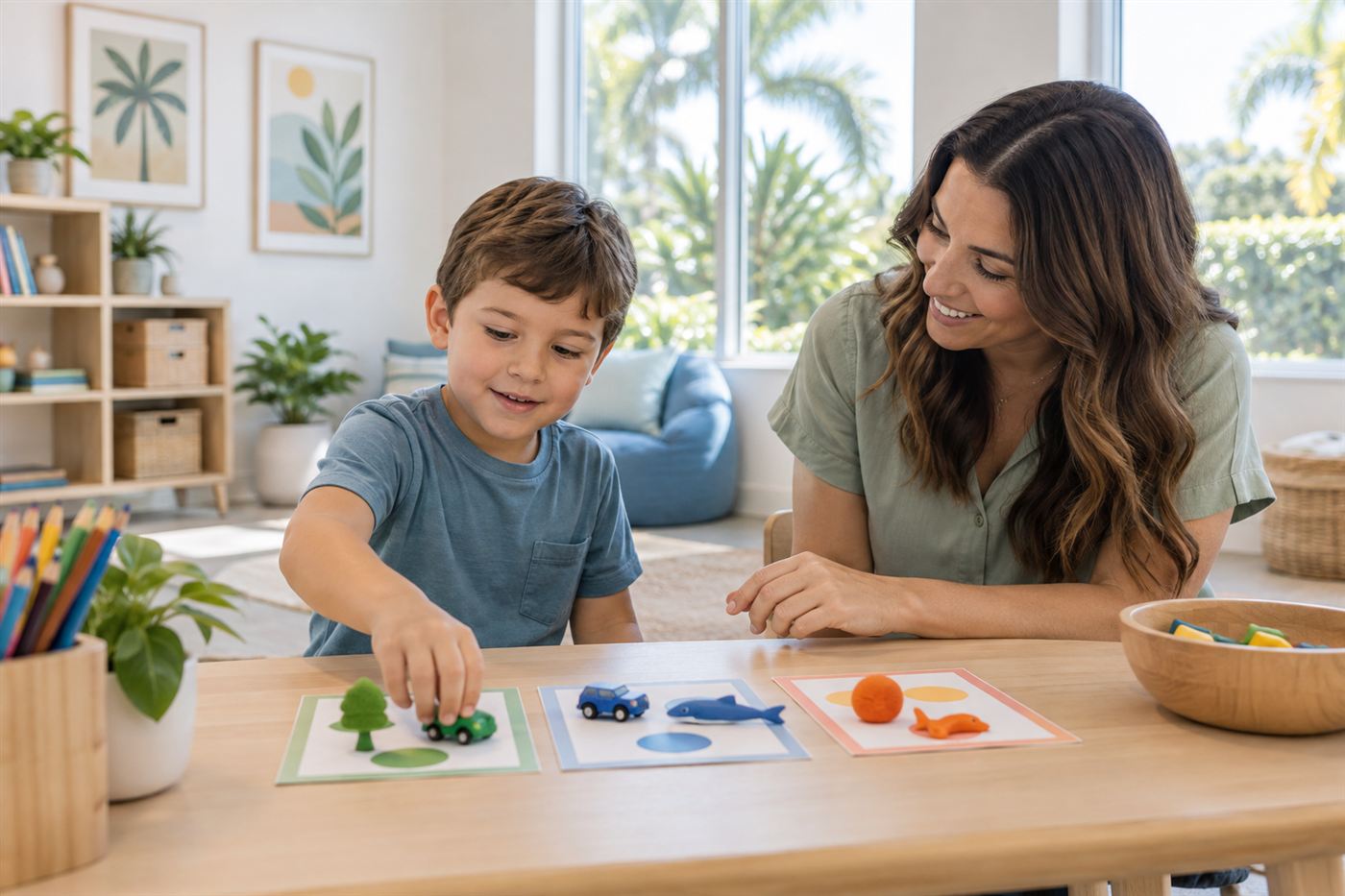
Assessment and care planning
A careful look at what behavior is communicating and a plan families can follow.
Learn more →Broward County, Florida
Rydz Behavioral Health is a Broward County practice led by Dr. Thalia Rydz. We help families, teachers and professionals understand what behavior is communicating, build calmer routines, and work together with respect, in English or Spanish, at home, at school, online or at the office.
For families, educators and referring professionals.
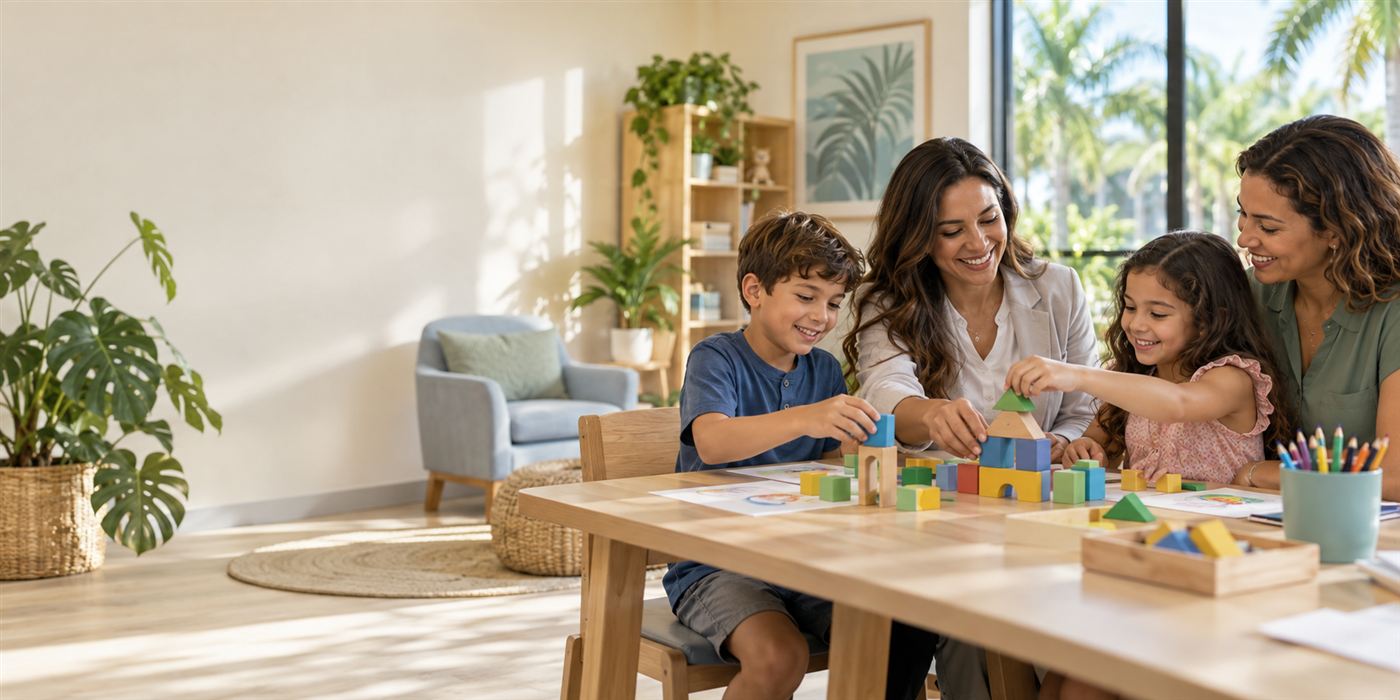
Ways we can work together
A careful look at what behavior is communicating and a plan families can follow.
Learn more →Support for children, with the people who know them best at the center.
Learn more →Practical coaching for everyday routines and shared problem solving.
Learn more →Shared language and steady routines between home and school.
Learn more →A second perspective for professionals and teams.
Learn more →Support where life happens, in person or by phone and video.
Learn more →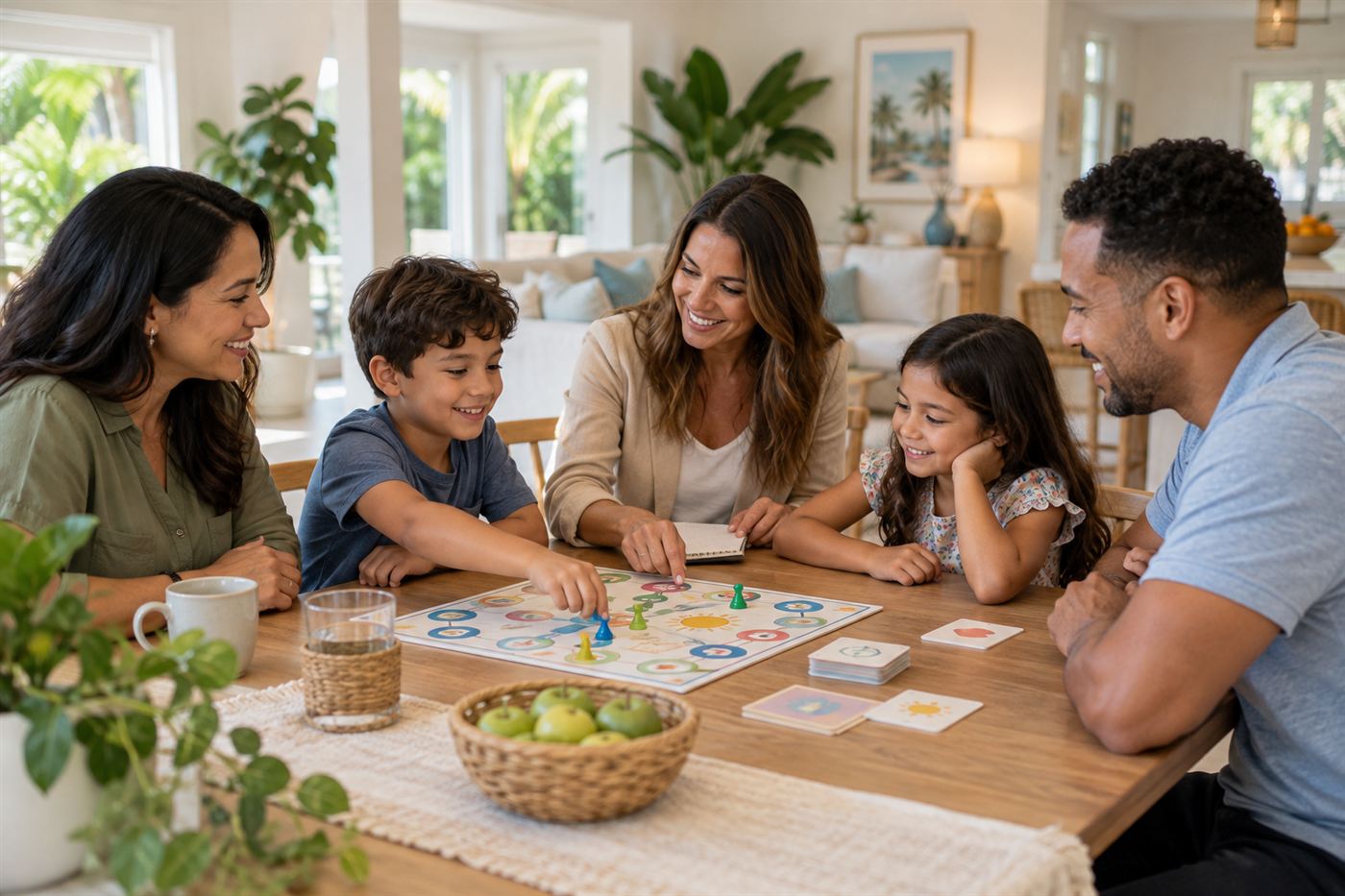
Dr. Thalia Rydz
Rydz Behavioral Health is led by Dr. Thalia Rydz, who brings clinical social work and family systems training to behavior support for children and the people around them.
Her approach starts with listening, explains each step in plain language, and keeps families, schools and professionals working from the same page. English and Spanish are both spoken.
What guides the work
Needs, strengths, routines, environments and priorities all matter when forming a useful plan.
Families and partners should know what is being considered, why it matters and what comes next.
Support becomes more usable when the people involved can communicate clearly and consistently.
A clear beginning
Call or write and describe what brings you here, without sensitive health details.
The practice explains the service, the setting and how payment is handled.
You learn which documents may be needed and how scheduling works.
A first meeting focuses on understanding, not on conclusions.
Learning center
Rydz Behavioral Health is a behavior support practice serving Broward County, Florida. The practice is owned and led by Dr. Thalia Rydz, who works with children and their families, with schools, and with other professionals who want a thoughtful second perspective.
Families usually find us at a tiring moment. A morning routine has turned into a daily struggle, a classroom situation keeps repeating, or a team simply wants a shared plan. We start from a calm belief: behavior makes sense once you understand what a child is trying to say and what the surroundings are asking of them.
On this page you will find a plain-language overview of who we are, what we offer, how a first conversation works, and how to begin. Each section points to a longer page if you would like more detail.
Many parents tell us they are not sure whether what they are seeing is a big concern or a normal stage. That uncertainty is reasonable. Children grow quickly, routines shift with every school year, and families change too. A conversation with someone who looks at behavior closely can help you sort out what is ordinary, what deserves attention, and what could make the day easier for everyone.
The practice is small by design. When you reach out, you reach the people who will actually do the work. That keeps communication direct, and it means the plan you build is shaped by someone who knows your family's story rather than a form.
Parents who feel worn down by a recurring struggle at the door in the morning, at the table in the evening or at bedtime often call first. Teachers who want a shared approach for a student, and professionals who want to think through a challenging case with a colleague, reach out as well. Each of them is looking for the same thing: a clear way forward that respects the people involved.
Behavior analysis is the study of how behavior and surroundings affect one another. That sounds technical, but the ideas are familiar. A child who is tired after school may be short with a sibling. A student who is unsure how to ask for a break may put their head on the desk. In both cases the behavior is doing a job.
Support built on these ideas begins with careful looking and listening. We ask what happens just before a behavior, what happens right after, and what skills would make the moment easier. Then we plan small, kind changes to routines, communication and teaching, and we check together whether they are helping.
Consider a general example. A boy melts down every time the family leaves the park. Looking closer, the adults notice that the warning is always sudden, that leaving means giving up a favorite game, and that no one has told him what comes next. A plan might include a gentle countdown, a picture or phrase for what happens next, and praise for each step he completes. The behavior is not excused, but it is understood, and the adults can teach a better way to handle the end of something enjoyable.
A second example involves a girl who often leaves her seat during writing time. The team could assume she does not want to work. A closer look might show that long writing tasks feel overwhelming and that getting up is how she escapes the feeling. Breaking the task into smaller parts and teaching her to ask for a short break may help far more than a consequence. These are general educational illustrations, not real clients and not promises.
Every behavior, from a quiet withdrawal to a loud protest, tells us something. It may mean a child wants attention, needs a break, feels unsure about a change, or has not yet learned another way to ask. Understanding the message is the first step, and it keeps the focus on teaching rather than blame.
A plan that no one can remember will not help. We keep recommendations short, explain every word we use, and write them so that parents, grandparents, teachers and the child can all understand them. You can read more in the page on how we think about behavior.
Behavior analysis uses careful notes. That may sound cold, but it is really about paying attention. A simple note on when a hard moment happens, what was going on, and what helped can reveal patterns that memory misses. We explain every chart or note in plain words, and we only ask families to record what is realistic for their schedule.
Dr. Rydz is a clinical social worker. She holds a Master's degree in Clinical Social Work and a Ph.D. in Marriage and Family Therapy, and she practices in Broward County. She speaks English and Spanish, which means many families can discuss their concerns in the language they use at home.
Her family systems training shapes how she works. A child lives inside a family, a school and a community, so she looks at the whole picture instead of treating a single behavior in isolation. Parents are treated as the experts on their own child, and teachers as the experts on their classrooms.
You can learn more about her outlook and how she works with families, schools and colleagues on the page about Dr. Rydz.
She also understands that asking for help is not always easy. Some parents worry that they will be judged, and some teachers worry that a consultant will arrive with criticism. Dr. Rydz begins with respect and curiosity, and she treats everyone in the conversation as someone who wants good things for a child.
Being able to speak English and Spanish matters. Families can use the language that feels most natural for describing feelings and worries, and grandparents or relatives who prefer Spanish can take part fully in planning. Clear communication is part of good support, and it starts with being understood.
The practice offers five connected services. Some families use one, and others combine several over time. You do not need to decide everything at the start. A first conversation helps choose a sensible starting point, and you can adjust later as needs change.
The services overview explains how these pieces fit together.
Think of the services as a set of doors into the same house. Assessment tells us what is happening. Training helps the adults at home. Consultation helps the adults at school. Professional consultation supports colleagues, and direct support helps a child practice skills with the family nearby. The doors connect, so what is learned in one place can strengthen the others.
Many families begin with assessment and care planning because it creates a shared understanding. Others start with parent and caregiver training because they want practical tools quickly. Schools often begin with a consultation conversation. There is no single correct order, and the first call is the right place to talk it through.
Good support begins with understanding. An assessment is a series of conversations and, when helpful, observations. We listen to caregivers and teachers, learn about routines and strengths, and look for patterns in what comes before and after a challenging moment.
From that information we write a care plan in everyday language. The plan is reviewed with the family, changed when something does not fit, and revisited over time. We do not promise particular changes, because every child and family is different. We do promise to explain what we see and why we suggest a step.
Read more about assessment and care planning.
A typical assessment includes a conversation with the adults who know the child well, a look at daily routines, and, when appropriate, observation at home, school, or by video. We pay close attention to strengths as well as struggles. A child who loves drawing, trains, or helping with cooking has built-in motivation that a good plan can use.
The written plan is not a lecture. It lists a small number of priorities, describes what the adults will do, and describes what skills will be taught to the child. Reviewing it together matters, because the people who live with the plan every day know firmly what is realistic. If something does not work, we change the plan rather than blame the family.
Parents and caregivers are with a child for far more hours than any professional can be. For that reason, coaching the adults is often the most useful thing we do. Sessions focus on practical matters such as predictable routines, clear and kind communication, and responding calmly to hard moments.
We also talk about consistency between caregivers, including grandparents and other relatives, about siblings, and about the values and culture that guide your family. Our suggestions are meant to fit your life, not replace it. Between meetings, families try small ideas and bring back what they noticed.
See the page on parent and caregiver training for examples.
Here is a general example. A father and a grandmother both care for a daughter after school, but they handle homework differently. One offers snacks first and the other insists on finishing assignments right away, and the child is confused. In coaching, the adults agree on a simple order for the afternoon, use the same short phrases, and practice staying calm if there is protest. The aim is not perfection but a predictable rhythm.
Another example involves two brothers who argue over the television. Instead of refereeing every conflict, the caregivers could teach turn-taking, set clear and fair routines, and notice and praise moments of cooperation. Coaching helps adults decide what to do ahead of time, so they are not improvising when everyone is tired.
Skills grow with repetition. Families try one or two small ideas between meetings, then share what they noticed. We celebrate small steps, adjust what is too hard, and never expect a household to change overnight.
Children move between home and school every day, and the two settings function well when adults share a common language. We consult with teachers and school teams on classroom routines, transitions, and ways to teach the skills a student is still building.
We respect school roles and the family's rights. Our consultation does not replace a school evaluation, and we do not offer legal advocacy. What we can offer is observation, thoughtful discussion, and ideas that a team can try together. When a family and school are on the same page, a child usually feels it.
Learn more about school and educator consultation.
For example, a teacher might notice that a boy struggles most when the class moves from reading to math. A consultation conversation could explore a visual schedule, a short warning before the switch, and a quiet signal he can use to ask for help. At home, the family might use the same words so the child hears one message in both places.
We also help teams think about how adults respond. A calm, predictable reaction from staff can make a big difference to a student who is already overwhelmed. Meetings are collaborative, with parents invited whenever possible. Our role is to support the team and the family, never to replace the school's own professionals or evaluations.
Professionals who support children can feel isolated with a hard case. This service offers a second perspective on behavior support plans, case discussion, and reflective practice, in a respectful setting where nobody is expected to have every answer.
Eligibility and any supervision arrangements are confirmed with the practice directly. If you are a colleague or team leader who is interested, reach out and describe what you are looking for. We will tell you plainly whether we are a good fit and how the work would be arranged.
Visit professional consultation and supervision for more.
Case discussion might involve describing a student or client in general terms, reviewing a behavior support plan for clarity and kindness, or thinking through how to explain a plan to a family. Reflective practice means pausing to ask what we are noticing, what assumptions we are making, and whether the plan fits the person it is meant to help.
Privacy remains central. Professionals are encouraged to share only what is needed for the discussion, and identifying details can be left out. We do not state credentials beyond those listed on the About page, and we will not claim authority we do not have.
Some children benefit from direct sessions, with a parent or caregiver involved throughout. We plan activities around play and learning, home routines, and the skills that will make everyday life easier, such as asking for help, waiting, or handling a change.
Boys and girls are equally part of this work. A daughter learning to manage frustration while a brother builds a bedtime routine, a son practicing how to ask for a break, a younger sister learning to share the swing: each is a general example of the kinds of skills families work on. Older children and teenagers are invited to collaborate, because plans work better when they have a voice.
Find details on child and family behavior support.
Sessions are planned around what the family wants to work on. A younger child may practice waiting for a turn through a game, while an older child may rehearse how to start a hard conversation. Parents are not waiting in the hallway. They are part of the room, learning what we try so they can use it at home the next day.
Siblings matter, too. Brothers and sisters notice everything, and plans can include them with suitable roles, such as being the helper in a routine or celebrating a brother's or sister's progress. Fairness is important, and so is protecting each child's feelings and privacy.
Our work is for people who care about children's wellbeing and want practical help. We do not assume a particular family shape. Single parents, grandparents raising grandchildren, blended families, foster and adoptive caregivers, and families who share care across homes are all part of the picture.
We do not list ages or diagnoses on this site, and we will not ask you to fit a label before you can start a conversation. If you are worried about a child, that is reason enough to talk.
We know that the word behavior can feel loaded. Many parents have heard it used in ways that sounded like blame. Here it simply means what a person does, and our work is to understand it and teach skills. We avoid labels, we use respectful language, and we listen when a family tells us a word does not fit.
Support is flexible. It can take place in the home, at school, by phone or video, or at the office. Many families combine settings, for example beginning with a video call and later adding a home visit.
The right setting depends on the child, the goals, and what is practical for your household. Watching a morning routine in the home can teach us a great deal. A short video call may be easier for a busy parent. The page on home, school, telehealth and office visits explains how each one works and how to prepare.
Seeing real routines helps everyone. At home, we can look at mornings, meals and bedtime. At school, with the right permissions, we can understand how the day is organized and where transitions happen.
Telehealth saves travel and makes it easier to include several caregivers at once. The office offers a quiet, private place to talk and work. Service locations are confirmed during the first conversation.
The first conversation is relaxed. You will not be asked to prove anything. We begin by listening to what has been happening, what you have already tried, and what you hope for. Then we explain the five areas of support and ask what sounds most useful.
Before the call, it can help to jot down a few notes: a typical day, times that go smoothly, times that are hard, and any questions you want to ask. The guide to preparing for a first visit offers a gentle checklist, and nothing in it is required.
You are in charge of what you share. If a topic feels too personal for a first talk, say so, and we will come back to it later. If you would like a family member to join, invite them. If you would rather keep the first call short, we can do that too.
At the end of the conversation, we summarize what we heard in a few sentences so you can check that we understood. You will leave knowing what the possible next steps are, what each would involve, and what you need to decide. There is no pressure to decide that day.
The practice works with three routes: insurance, Medicaid, and private pay. Which one applies depends on your situation, and the details belong in a direct conversation rather than on a web page.
We do not name plans here, we do not post prices, and we cannot promise that any plan will cover a service. Coverage and eligibility are verified before services start, so you know where you stand. The page on paying for services suggests questions to ask your own plan.
Some families wonder whether to ask their plan first or contact us first. Either order is fine. If you want to check with your plan, ask what is needed for behavior support services, whether a referral or authorization is required, and how to confirm eligibility. We will do our part to verify details before services begin, and we will explain what we learn in plain words.
Broward County is a varied place. Its neighborhoods, school communities and family traditions differ widely, and many households speak more than one language. That diversity is part of why we try to meet families where they are, and why our plans always reflect each family's values.
Because in-person visits and telehealth both play a role, we confirm locations and travel on the first conversation instead of promising specific areas in advance. See areas served for more on how this works.
Families in the county sometimes commute long distances for work, share childcare between households, or move between school systems. Those realities shape what is practical. A telehealth session can be convenient when traffic is heavy, while a home visit may be valuable when the real challenge happens in a specific room at a specific time.
Four commitments shape everything we do. They are simple, and we hold ourselves to them.
First, dignity. Children are people, not problems, and adults deserve respect too. Second, collaboration. We build plans with families and teachers, not for them. Third, clarity. We explain our reasoning in plain words and avoid jargon. Fourth, humility. We tell you what we do not know, and we invite questions at every step.
What we do not do is just as important. We do not make promises about change, we do not use pressure or fear, and we do not claim to be a government agency or program. We are a private practice with a caring approach.
These values also guide how we talk about progress. We describe what we see, share what has changed in daily life, and discuss what to adjust. We do not use dramatic language or compare families to one another. Every household has its own pace.
If you like to read before you call, the resources and guides section explains behavior analysis, preparing for a visit, working with your child's school, and everyday routines. The frequently asked questions page covers many common concerns in detail.
When you are ready, the contact and intake page explains how to reach us and what happens next. If anyone is in immediate danger, call 911. For a mental health crisis, call or text 988.
No. You can reach out because you are worried, curious or simply want to understand a child's behavior better. The first conversation is about listening and helping you choose a starting point. If a payment route has its own requirements, the practice will explain them clearly before services begin, so you can decide what makes sense for your family without feeling rushed.
Dr. Thalia Rydz is the owner and clinician of Rydz Behavioral Health. She is a clinical social worker with a Master's degree in Clinical Social Work and a Ph.D. in Marriage and Family Therapy. She practices in Broward County and speaks English and Spanish. Her family systems training shapes a collaborative, respectful way of working with families, schools and professionals.
Yes. Support can take place in the home, at school, by phone or video, or at the office. Many families combine settings. Home visits help us see real routines, school involvement helps teams share one plan, and telehealth is convenient for busy households. We discuss what is practical and what you are comfortable with during the first conversation.
The practice works with insurance, Medicaid and private pay. We do not name plans on this site, list prices or promise that any plan will cover a service. Because each plan has its own rules, we talk through your route and verify coverage and eligibility before services start. You are welcome to ask your plan questions as well, and we can suggest ones to bring.
No. The information here is general education and is not individual medical, clinical or legal advice. Visiting the site or sending a message does not create a professional relationship by itself. If you are concerned about a particular child, please start a conversation with the practice. If someone is in immediate danger, call 911, or call or text 988 in a mental health crisis.
With your permission, yes. We can consult with teachers and school teams so that home and school share a common language. We respect school roles and your family's rights, and our consultation does not replace a school evaluation or provide legal advocacy. The aim is to help the adults around a child work together calmly and consistently.
Yes. Every child deserves thoughtful support, and our examples and planning include boys and girls equally. Plans are shaped around each child's strengths, interests, family values and the situations they face, rather than assumptions about gender. Older children and teenagers are invited to share their views, because plans work better when young people feel heard and respected.


A thoughtful next step
Tell the practice what brings you here and what you hope to understand. The first conversation is about fit, setting and next steps.